When international law becomes a post-mortem archive
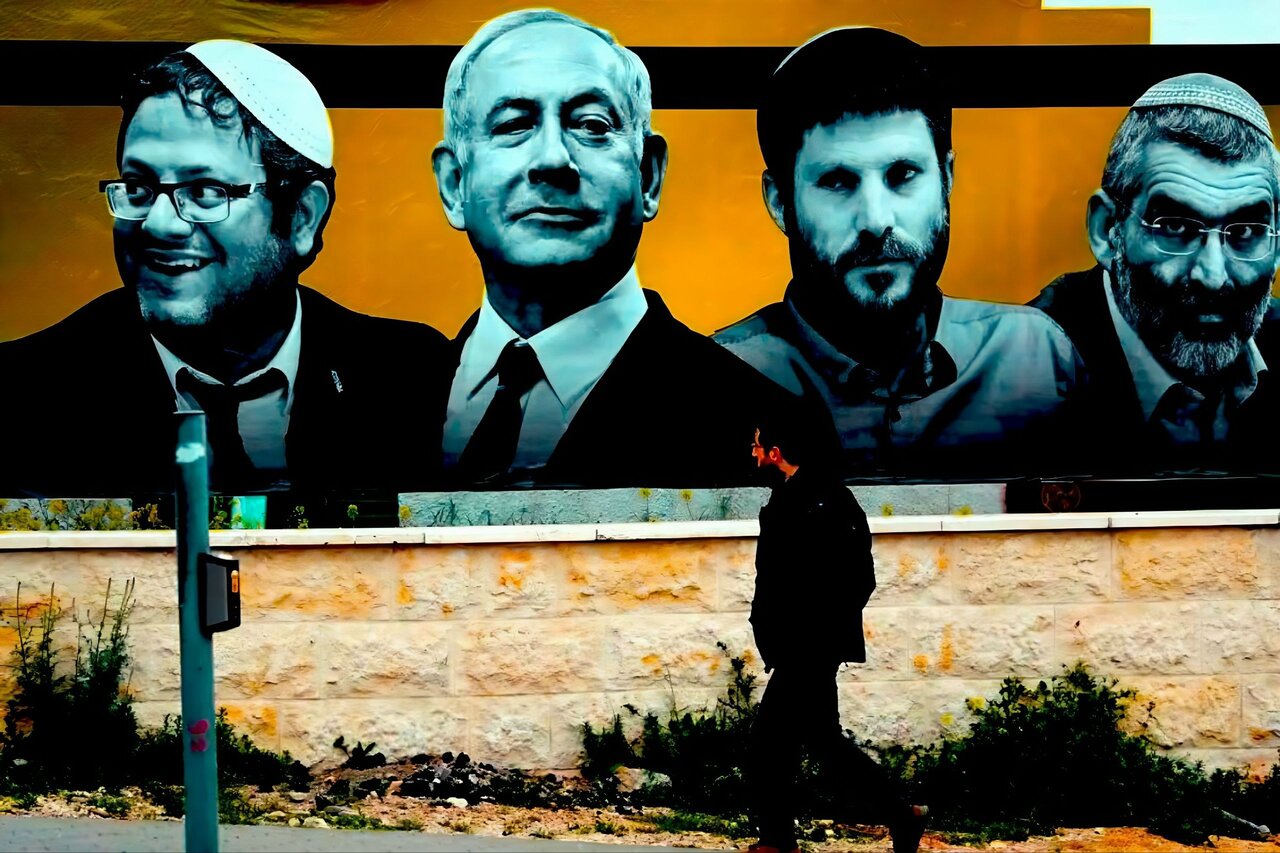
TEHRAN — A report published by Haaretz on May 17 suggests that the International Criminal Court is moving quietly toward new arrest warrants for senior Israeli figures, including Bezalel Smotrich and Itamar Ben-Gvir, alongside military officials tied to the genocidal war on Gaza and the wider campaign of destruction across the region.
It is an important development, but it is also a deeply sobering one: by the time international law begins to inch forward, Gaza has already been pulverized, its people starved and displaced, and the entire region dragged further into a widening fire.
A delayed reckoning
The indictments matter because they widen the legal frame beyond Benjamin Netanyahu and Yoav Gallant, whose 2024 warrants marked the first real crack in the wall of impunity around Israel’s leadership.
But the central fact remains unchanged: this is happening after the crime has already matured into catastrophe.
Smotrich and Ben-Gvir are not incidental names, but the unapologetic standard-bearers and the purest expressions of an expansionist, eliminationist system built on siege, annexation, and the normalization of the dispossession and mass killing of Palestinians. The reported move against them is welcome, but it also reads like a legal history written after the bodies have already been counted.
International law as archive
Smotrich and Ben-Gvir symbolize the merger of ideology and exterminationist policy. Smotrich has openly defended the strangling of Gaza and treated starvation as a tool of policy, while Ben-Gvir has turned racial provocation, prison abuse, and settler militancy into a governing doctrine, vividly illustrated by his grotesque celebration of a birthday cake adorned with a hangman’s noose over a map of Gaza.
They are not fringe extremists hovering around power; they are the power. That is precisely why any legal action against them should have come much earlier, before the logic of ethnic cleansing had been given so much time to harden into practice.
The deeper failure is that international law has behaved less like prevention than like an archive. It records the abuse, names the abuse, and waits while the abuse continues.
That is not justice in any meaningful sense for the civilians buried under rubble, or for the families trying to survive under siege in a territory where hospitals, schools, water systems, and aid routes have all been pushed to the edge of collapse.
The war on the ICC
The ICC itself has not been allowed to function normally. Its prosecutor, Karim Khan, has faced a sustained campaign of intimidation, leaks, and political pressure since he moved toward warrants against Israeli officials.
Middle East Eye has reported that threats, surveillance fears, and a stream of damaging allegations appeared precisely as Khan’s work became most dangerous to the powerful.
The United States has been central to that method. Republican senators reportedly warned Khan, “Target Israel and we will target you,” and the Trump administration escalated the campaign by sanctioning ICC officials and even Palestinian rights organizations linked to the court’s work.
The message to The Hague was blunt: pursue Israel, and your institution will pay. This is how international law is strangled in practice, not by argument but by leverage.
Built to fail
That pressure exposes the real condition of the “rules-based international order.” It is not rules-based at all when the accused is a U.S.-backed ally.
When the ICC moved against Vladimir Putin, Western capitals praised the court as courageous. When it turns toward Israeli officials, the same governments suddenly discover concerns about politics, jurisdiction, and overreach. The hypocrisy is so routine that it has become structural.
And the consequences are visible far beyond the courtroom. Gaza continues to suffer under blockade, bombardment, and hunger, while the West Bank is carved up further by settlement expansion and settler violence.
Lebanon has been subjected to relentless, devastating strikes, while recent direct aggressions against Iran have shattered long-standing red lines and aggressively expanded the regional war map.
These relentless bloody escalations underscore the near-uselessness of international bodies, leaving global frameworks completely bypassed by the raw exercise of military force. The UN can issue condemnations, the ICC can investigate, but neither can compel the parties fueling the destruction to stop.
So yes, if these new warrants are confirmed, they will matter. They will matter because they name some of the people who helped design and defend an architecture of death. But they will not be enough.
That is the moral scandal at the center of this moment: the machinery of international justice is still alive enough to partly document atrocity, but too weak to interrupt it.
In Gaza, that weakness has meant starvation before scrutiny, annihilation before accountability, and impunity before anything resembling protection.
True accountability demands more than sealed warrants in The Hague. It requires dismantling the political and military lifelines that make such atrocities possible.
Without that, the ICC’s efforts will serve mainly as footnotes in the continuing story of a broken global order that functions as a post-mortem archive for the dead rather than a shield for the living.
Leave a Comment